

Graveyard Lore: Decoding Symbolism on Appalachian Headstones
In Appalachian graveyards, symbols speak louder than inscriptions—if you know how to read them.

🪦 In the quiet corners of Appalachian cemeteries, headstones whisper stories that paper records never captured. These carved symbols—willows, clasped hands, lambs, broken chains—aren’t just decoration. They’re emotional shorthand for grief, faith, and the cultural rhythms of a region shaped by isolation, resilience, and reverence for the dead.
This post explores the most common motifs found on 19th-century Appalachian headstones, decoding their meanings and offering tools for genealogists to interpret them in context.
🕊️ Why Symbolism Matters in Appalachian Cemeteries
Appalachian graveyards often served as the final record for families whose lives weren’t documented elsewhere. In regions where literacy was limited and church records sparse, headstones became visual archives—each symbol a clue to the life, beliefs, and community ties of the deceased.
These motifs reflect:
Religious beliefs: Protestant, Baptist, and Methodist traditions shaped iconography.
Cultural values: Emphasis on family, innocence, and the afterlife.
Artistic trends: Folk carving styles and regional stonework preferences.
🌳 Common Symbols and Their Meanings
Here are some of the most frequently found motifs in Appalachian cemeteries, especially from the mid-to-late 1800s:
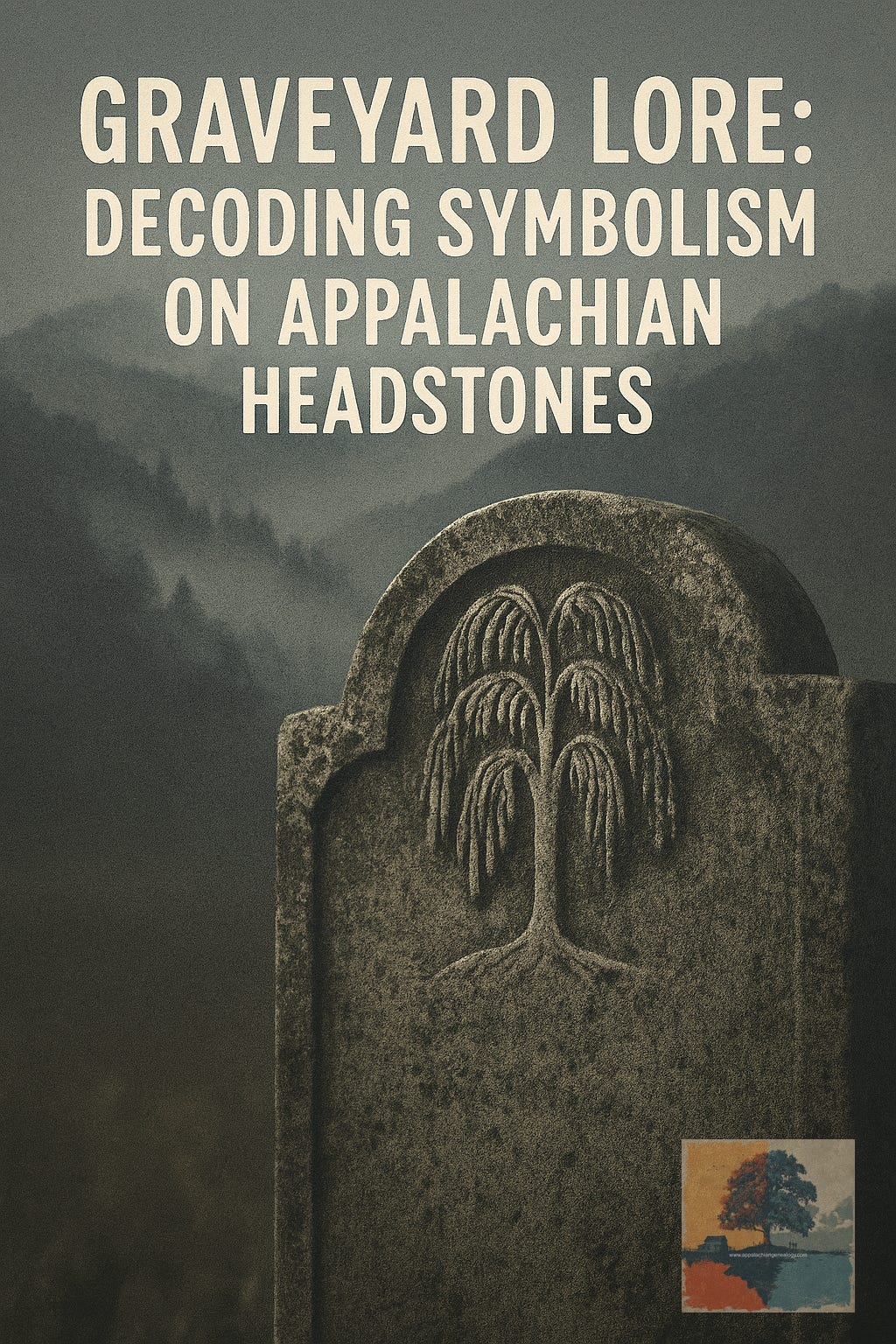
🌿 Weeping Willow
Symbolism: Mourning, sorrow, and the fragility of life.
Context: Popular in the Victorian era; often found on older stones.
Interpretation tip: May indicate a death during a time of widespread grief (e.g., epidemics or war).
🤝 Clasped Hands
Symbolism: Farewell, unity, or a handshake between the living and the divine.
Details to note: If one sleeve is feminine and the other masculine, it may represent a married couple.
Interpretation tip: Often used to signify a peaceful passing or spiritual reunion.
🐑 Lamb
Symbolism: Innocence and purity; most common on children’s graves.
Context: Reflects Christian imagery of Jesus as the shepherd.
Interpretation tip: May be accompanied by phrases like “Our Little Angel” or “Gone Too Soon.”
🔗 Broken Chain
Symbolism: Loss within a family unit; the “chain” of life disrupted.
Context: Often used when a parent or child dies prematurely.
Interpretation tip: May appear alongside other familial symbols like hearts or hands.
📖 Open or Closed Book
Symbolism: The Bible, wisdom, or the story of a life.
Open book: A life cut short or still unfolding.
Closed book: A completed life or final judgment.
Interpretation tip: Look for inscriptions that reference scripture or learning.
🕯️ Draped Urn
Symbolism: Mourning and the veil between life and death.
Context: Common in Victorian funerary art.
Interpretation tip: May indicate a more urban or affluent burial, as urns were less common in rural areas.
⏳ Hourglass
Symbolism: The passage of time and inevitability of death.
Interpretation tip: Often paired with wings or flames to suggest the soul’s journey.
🪨 Materials and Regional Style
Most 19th-century Appalachian headstones were carved from:
Marble: Soft and elegant, ideal for intricate carvings but prone to erosion.
Granite: Durable and weather-resistant, gained popularity later in the century.
Sandstone/Limestone: Locally sourced, easier to carve, but less durable.
Folk carvers often left behind distinctive regional styles—look for hand-chiseled lettering, asymmetrical motifs, and vernacular spelling.
🔗 Explore examples at 19thCentury.us 🔗 Symbol guide from Gravestone Studies
🧭 How to Use Symbolism in Your Research
When visiting a cemetery or reviewing headstone photos:
Document the symbol: Sketch or photograph it clearly.
Note the context: Surrounding graves, inscriptions, and location.
Cross-reference with records: Use symbolism to guide searches in church rolls, death registers, or family Bibles.
Ask locals: Oral history may explain regional carving traditions or unique motifs.
🕯️ Final Thoughts
Appalachian headstones are more than stone—they’re emotional artifacts. Each symbol carries the weight of a family’s grief, hope, and memory. For genealogists, decoding these motifs isn’t just about data—it’s about empathy. It’s about listening to the silence and reading the symbols carved into the hills.
Next time you walk through an old cemetery, pause. Look closer. The willow weeps for someone. The clasped hands still hold on.
💬 Your Turn: What Symbols Speak to Your Family’s Story?
Have you come across a headstone symbol that moved you—or puzzled you? Whether it was a weeping willow in a forgotten cemetery or a clasped hand carved by a folk artist, I’d love to hear what you’ve found. What did it mean to you? Did it lead to a new discovery in your family research?
Drop your story, photo, or question below. Let’s decode the silence together.